
For more than two years we have engineered the connected core of CraftStrom's plug & play solar systems: a network of devices that extends itself as homeowners add panels, monitors and batteries.
For more than two years, MicroBitDesign has worked as part of CraftStrom's engineering team on plug & play solar systems. Our focus is the part that makes the system feel simple to the user: the communication between its devices, and the gateway that connects the hardware to CraftStrom's software environment.
The engineering problem
A plug & play energy system isn't one device. It's a small distributed system that the end user assembles, often a piece at a time:
- a household may start with two panels and add more later,
- a monitor is installed somewhere else in the home,
- a battery may be added a year after the first panels.
Every new device has to join the system without an installer, without configuration screens and without the user understanding anything about networking. At the same time, this is a power product: the system has to react quickly and predictably to what the house is consuming, and it must stay safe when something goes wrong.
A network that grows with the system
The devices form a mesh network: each device can talk to its neighbours and relay traffic for others. That brings properties that matter a lot for a product installed by end users:
- Easy expansion. Adding a panel or a battery adds a node, and the network extends itself to cover it.
- Range where it's needed. Balconies, garages and fences are often far from the router. In a mesh, devices bridge the distance for each other.
- Resilience. If one link gets worse (a door closes, furniture moves, someone parks a car in front of the panel), traffic finds another route.
Where we focus
Plug & play onboarding
Joining the network has to be both effortless and secure: a new device should join the right household's system, and only that one. We design the commissioning flow so the user plugs a device in and it simply appears in the app.
Real-time behaviour
Matching solar output to household demand is a control problem, not just a data problem. The firmware has to deliver fast, predictable responses reliably, not only on a quiet bench but on a busy network in a real home.
Fail-safe by design
In an energy product, "what happens when communication is lost?" is a safety question. The devices are designed to fall back to a safe state instead of carrying on blindly when links drop or data stops making sense.
The gateway to the software
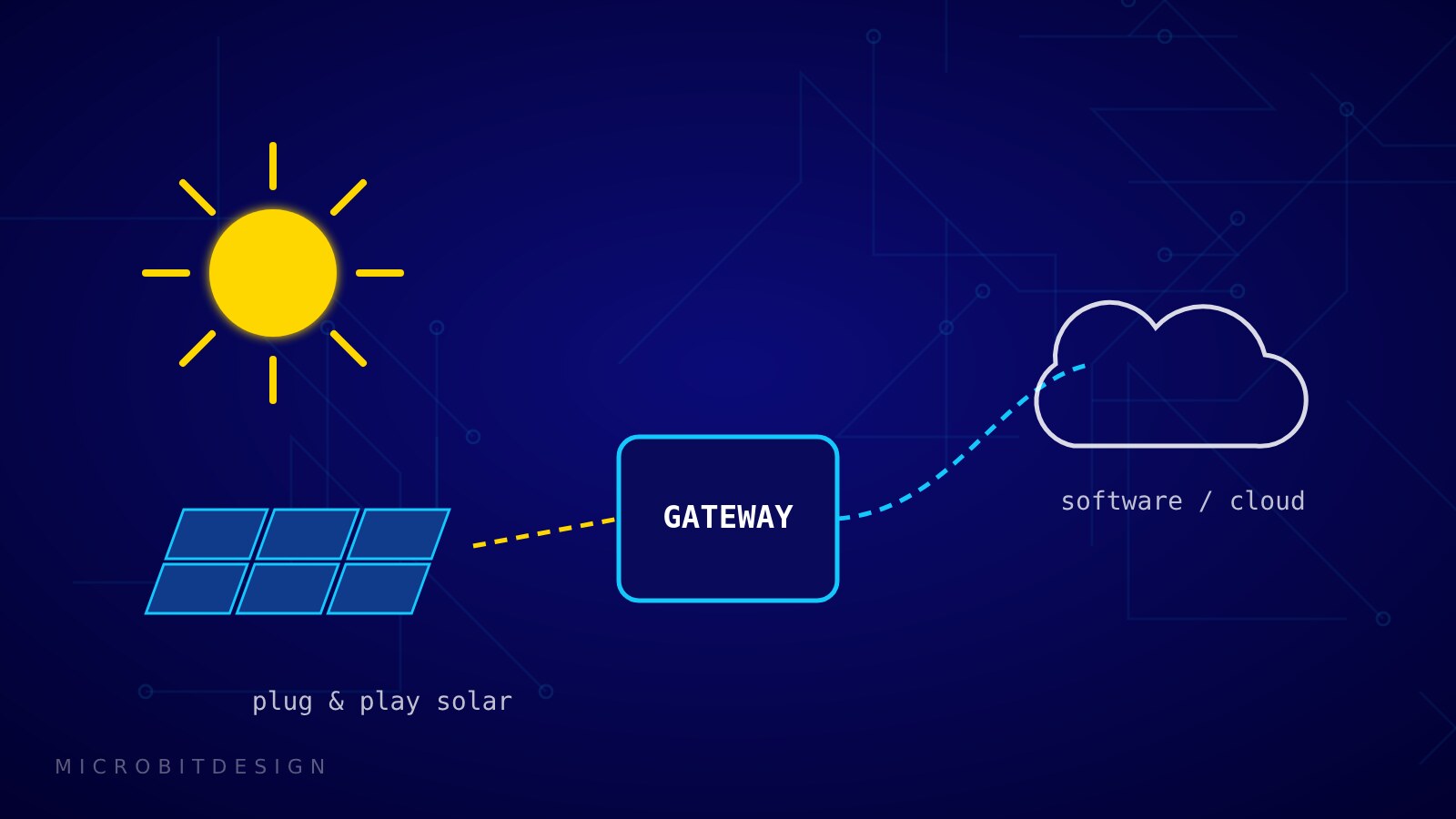
The gateway bridges the device network and CraftStrom's software environment, so production data, system status and battery state reach the app, and updates and configuration reach the devices.
A fleet that keeps improving
Products in the field keep getting better through updates. Updates have to be robust against interrupted downloads and power loss, and must never leave a device unusable.
How we work together
This isn't a hand-off project. We plan around CraftStrom's roadmap, timelines and budget, take ownership of our part of the system across product generations, and work day to day with their hardware and software teams. In their words, we're "already an integral part of their engineering team".
Technologies & disciplines
- Wireless mesh networking and device commissioning
- Embedded firmware for connected energy devices
- Gateway design between the device network and cloud/app services
- Over-the-air updates and fleet maintenance
- Safety-oriented system behaviour